
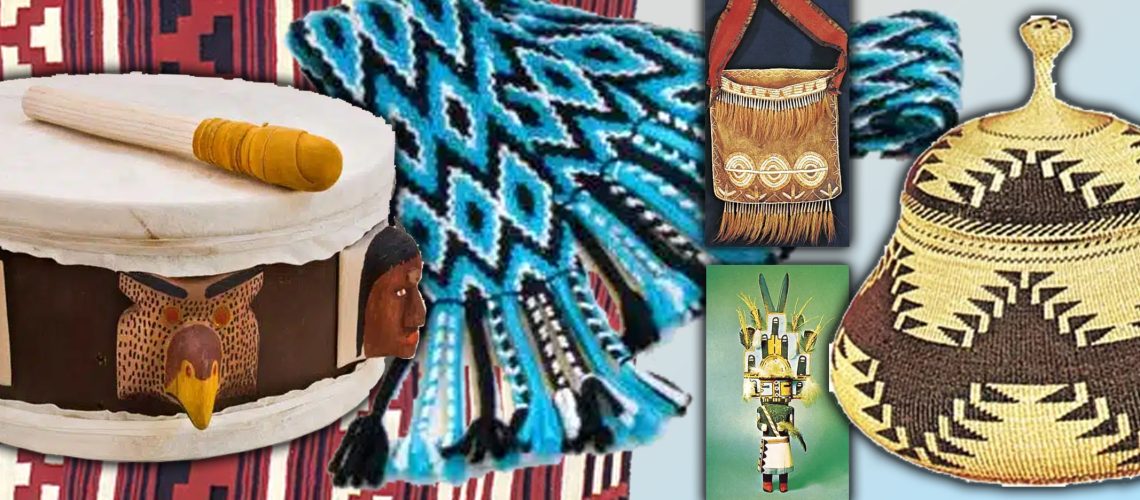
Native American art is often admired for its craftsmanship, but its deeper significance lies in its purpose. Across hundreds of Indigenous nations in North America, art has long served as a way to record history, express identity, honor spiritual beliefs, and strengthen community. Rather than existing solely for decoration, many works were created to be lived with, woven into clothing, carved into tools, painted onto pottery, or incorporated into ceremonies.
Because Native cultures are incredibly diverse, there is no single Indigenous artistic style. The beadwork of the Plains, the woven baskets of the Cherokee and other Southeastern tribes, the carved totem poles of the Pacific Northwest, and the pottery traditions of Pueblo communities each reflect the landscapes, materials, and stories of the people who created them. Natural resources such as clay, river cane, shell, wood, stone, feathers, and plant fibers shaped not only what could be made, but how communities expressed their relationship with the land.
Design also carried meaning. Repeating geometric patterns could represent family, place, or elements of the natural world, while colors and motifs often conveyed stories that had been passed down for generations. Function and beauty were rarely separated; a basket, blanket, or piece of jewelry could simultaneously serve a practical purpose while preserving cultural knowledge and artistic tradition.
Today, Indigenous artists continue to build upon these foundations, blending traditional techniques with contemporary media such as glass, photography, painting, and digital art. Their work demonstrates that Native American art is not a relic of the past, but a living practice – one that continues to evolve while remaining deeply rooted in culture, community, and place.