
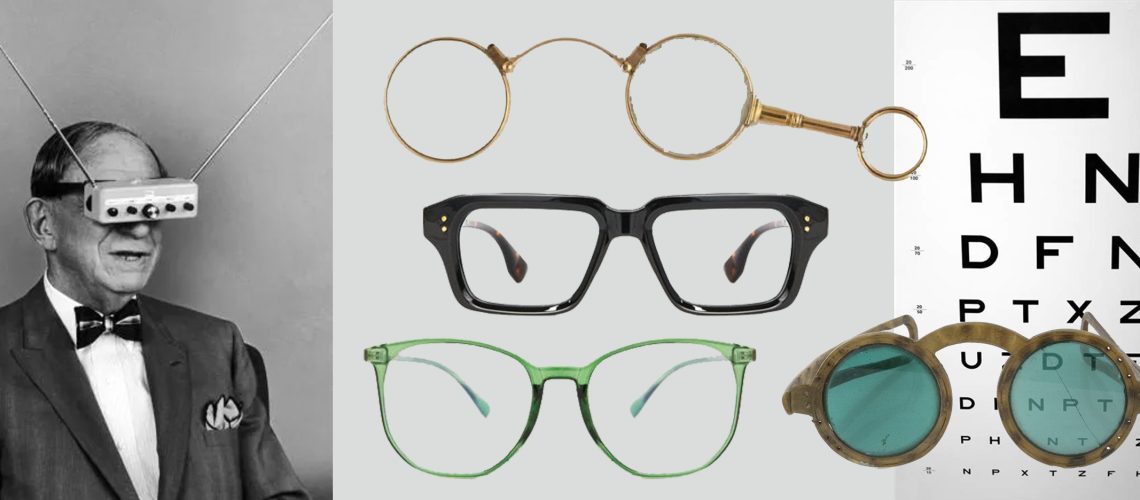
Eyeglasses occupy a unique place in design history. They are at once medical devices, fashion accessories, and objects of personal expression. Few everyday products have evolved so dramatically while maintaining the same fundamental purpose: helping people see.
The earliest eyeglasses of the thirteenth century were simple magnifying lenses held in front of the eyes. Over time, designers developed frames that could rest on the nose, hook over the ears, and eventually become comfortable enough for all-day wear. Advances in materials, from wood and horn to steel, titanium, and lightweight acetate, allowed glasses to become more durable, affordable, and expressive.
As eyewear became commonplace, design expanded beyond function. Round wire frames became associated with intellectualism, while the cat-eye silhouette reflected the optimism and glamour of the 1950s. Aviators, originally developed for pilots, crossed into mainstream fashion. Thick acetate frames, rimless styles, and minimalist metal designs each reflected changing tastes and cultural moments.
Today, eyewear design continues to balance performance with identity. Advances in lens coatings, blue-light filtering, and lightweight materials have improved comfort and usability, while frame design remains a powerful form of self-expression. The right pair of glasses can communicate professionalism, creativity, confidence, or individuality before a single word is spoken.
Like architecture or furniture, eyeglasses demonstrate how thoughtful design can solve a practical problem while also shaping how people present themselves to the world. Their enduring appeal lies in that dual role: functional object and personal statement
The College of Optometrists: History & Fashion of Sun Glasses
Smithsonian Magazine: 1,00 Years of Vision-Enhancing Technologies